


Every teacher knows that moment when something feels “off” with a student. Maybe it’s a usually talkative child who’s gone quiet, or a high achiever whose grades are suddenly slipping. These intuitions are valuable, but they’re not always enough. By the time behavioral or academic warning signs become obvious, students may have been struggling internally for weeks or even months.
The good news? Research shows that early intervention dramatically improves outcomes for students experiencing wellbeing challenges. The key is knowing what to look for and having a systematic approach to providing support.
The Warning Signs: What Educators Need to Watch For

1. Sudden Changes in Academic Performance
When a student’s grades drop unexpectedly or they stop completing assignments they previously managed well, it’s rarely about laziness. Academic decline often signals underlying stress, anxiety, or emotional difficulties that are consuming mental energy needed for learning.
What to do: Implement BounceTogether: Standardized Psychometric Assessment for Wellbeing to assess student attitudes toward learning and identify underlying factors affecting academic performance.
2. Social Withdrawal and Isolation
Students who suddenly stop participating in group activities, eat lunch alone when they previously had friends, or avoid social interactions may be experiencing relationship difficulties, bullying, or depression.
What to do: Use BounceTogether surveys focused on relationships and social connections. The Child Relationship Survey can identify issues with peer dynamics or bullying before they escalate.
3. Increased Irritability or Emotional Outbursts
When typically calm students become easily frustrated, emotional, or reactive, it often indicates they’re overwhelmed and lacking healthy coping mechanisms.
What to do: Introduce character strength-based approaches through Amazing People Schools: Character Strength-Based Approach. Teaching self-regulation and emotional management through relatable role models helps students develop resilience tools.
4. Physical Symptoms Without Medical Cause
Frequent headaches, stomachaches, or requests to visit the nurse can be manifestations of anxiety or stress, especially when medical examinations find no physical cause.
What to do: Use BounceTogether’s stress and anxiety surveys to identify underlying emotional factors. Consider implementing mindfulness activities or relaxation techniques in the classroom.
5. Changes in Attendance Patterns
Increased absences, frequent tardiness, or requests to leave class early can signal avoidance behavior related to anxiety, social difficulties, or problems at home.
What to do: BounceTogether wellbeing surveys can reveal whether school avoidance stems from feelings about the learning environment, peer relationships, or self-confidence issues.
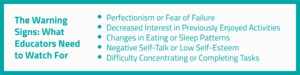
6. Perfectionism or Fear of Failure
Students who become paralyzed by assignments, erase work repeatedly, or have emotional reactions to minor mistakes may be experiencing unhealthy levels of performance anxiety.
What to do: Implement growth mindset interventions using Amazing People Schools stories that highlight how successful people overcame failures. Bounce Together’s Growth Mindset Survey can measure changes in students’ beliefs about learning and ability.
7. Decreased Interest in Previously Enjoyed Activities
When students who love reading, sports, or creative activities suddenly show no interest, it may indicate depression or a loss of motivation that extends beyond normal developmental changes.
What to do: Use BOOKR Kids: Digital Library and Reading App or Twin Science & Robotics: STEAM for Sustainability App to reignite engagement through interactive, personalized learning experiences that rebuild positive associations with learning.
8. Changes in Eating or Sleep Patterns
While schools may not directly observe sleep changes, students who frequently fall asleep in class, report chronic tiredness, or show changes in lunch consumption warrant attention.
What to do: BounceTogether’s Student Subjective Wellbeing Questionnaire includes factors related to overall life satisfaction and can indicate if broader wellbeing issues are affecting multiple life areas.
9. Negative Self-Talk or Low Self-Esteem
Students who frequently make self-deprecating comments, say they’re “stupid” or “can’t do anything right,” or compare themselves negatively to peers are showing signs of poor self-regard.
What to do: Use BounceTogether to measure student self-perception and confidence levels. Implement Amazing People Schools to help students identify and celebrate their character strengths.
10. Difficulty Concentrating or Completing Tasks
When previously focused students become easily distracted, can’t follow multi-step directions, or struggle to complete age-appropriate tasks, underlying anxiety or emotional distress may be fragmenting their attention.
What to do: Matific: Gamified Math App provides adaptive, bite-sized learning activities that reduce cognitive load while building confidence through immediate feedback and appropriate challenge levels.
Creating a Systematic Approach to Wellbeing Support
Recognizing warning signs is only the first step. Schools need comprehensive systems that enable early identification, evidence-based assessment, and targeted intervention.
The Wellbeing Pathway: A Comprehensive Framework
At Obelus, we’ve developed a four-stage wellbeing pathway that transforms scattered observations into actionable support:
Explore: Use BounceTogether to gather baseline wellbeing data across your student population, identifying both individual needs and whole-school trends.
Analyze: Examine the data to understand root causes. Are multiple students showing signs of test anxiety? Is there a pattern of social isolation in certain grade levels?
Solve: Implement Amazing People Schools curriculum to build character strengths, resilience, and emotional intelligence systematically across your school.
Develop: Partner with University of Buckingham for targeted teacher training based on your specific wellbeing data, ensuring educators have the skills to support diverse student needs.
Moving from Reactive to Proactive
The most effective wellbeing support happens before crisis intervention becomes necessary. By establishing regular wellbeing assessments, schools can identify emerging patterns and intervene early.
This proactive approach not only supports individual students but creates a culture where wellbeing is everyone’s responsibility. When students see that their emotional health matters as much as their test scores, they’re more likely to seek help when they need it.
Your Next Steps
If you’ve recognized several of these warning signs in your students, you’re not alone, and you’re not without resources. The tools exist today to transform how schools identify and support student wellbeing needs.

Because the best time to support student wellbeing is before crisis moments arrive, and the data to do so is already within reach.